Stergy Cleantech - Understanding Types of Panels, Components, and Installation
Solar energy usage surges due to sustainable energy needs and federal programs, growing 50% in the last decade. This guide highlights various solar panels, their components, and their installation.
What is a Solar Panel?
The sun's light, which is made up of energy particles called "photons," is converted into electricity via solar panels, sometimes referred to as "PV panels," which may be utilized to power electrical appliances.
In addition to producing energy for homes and businesses, solar panels may be used for a broad range of other purposes, such as remote electrical systems for cabins, communications technology, and remote sensing.
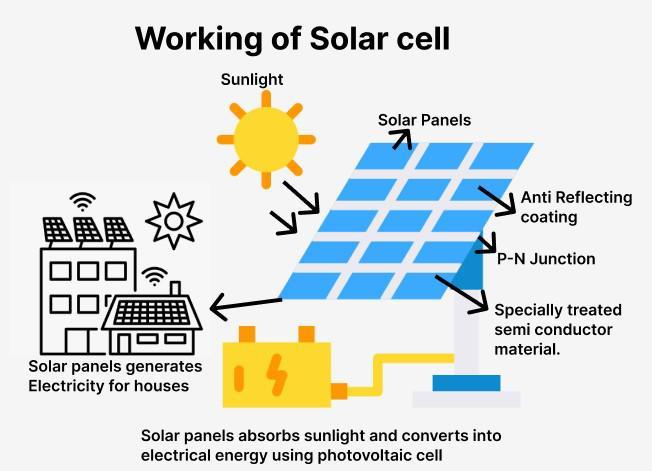
Components of Solar Panels
Most panels are made up of Silicon thin film ("amorphous"), polycrystalline, or monocrystalline. This post will describe the components needed to assemble a solar panel as well as how photovoltaic cells are created.
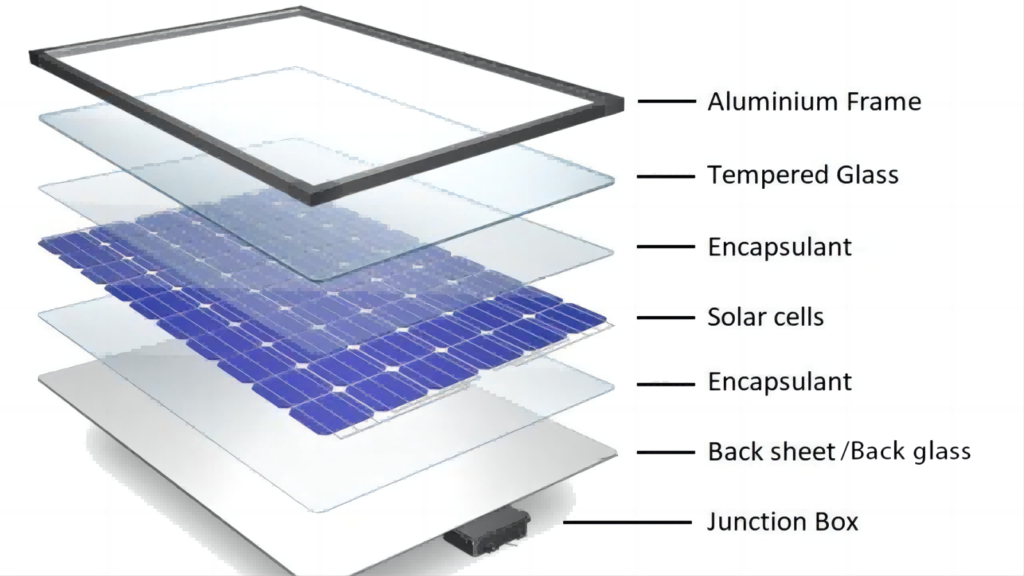
The typical solar panel is composed of individual solar cells, each of which is made from layers of silicon, boron, and phosphorus. The boron layer provides the positive charge, the phosphorus layer provides the negative charge, and the silicon wafer acts as the semiconductor.
Photons from the sun hit the panel's surface, displacing electrons from the silicon "sandwich" and directing them into the electric field produced by the solar cells. A directed current is produced as a result, and this current is later converted into useful power.
A solar panel is made up of several key components, each playing a vital role in the generation of electricity from sunlight. Here are the main components:
- Photovoltaic (PV) Cells: These are the heart of the solar panel. PV cells are made of semiconductor materials, such as silicon, which absorb sunlight and convert it into electricity through the photovoltaic effect.
- Encapsulation Material: PV cells are encapsulated within a transparent material, usually ethylene-vinyl acetate (EVA), which protects them from environmental factors like moisture and mechanical damage.
- Frame: Solar panels typically have an aluminum frame around the edges to provide structural support and protection. The frame also facilitates mounting and installation of the panel.
- Backsheet: The backsheet is a layer on the backside of the solar panel, usually made of a polymer or a combination of polymers, that provides insulation and protection against moisture and other environmental factors.
- Glass Cover: Solar panels have a tempered glass cover on the front side to protect the PV cells from impact, weather, and other external elements while allowing sunlight to pass through efficiently.
- Busbars: These are thin metal strips that collect the electrical current generated by the PV cells and conduct it out of the panel. They are usually made of silver or aluminum and are embedded on the surface of the PV cells.
- Junction Box: The junction box is located on the back of the solar panel and houses electrical connections, diodes, and bypass diodes. It serves to protect the panel's electrical components and allows for easy connection to other panels or electrical systems.
- Bypass Diodes: Bypass diodes are connected within the junction box and help to minimize power loss in cases of partial shading or when some cells in the panel are not functioning optimally. They ensure that current can still flow through the panel effectively.
- Interconnection Wiring: Copper or aluminum wires are used to connect the PV cells, busbars, and junction box components, facilitating the flow of electricity within the solar panel and allowing for external connections.
These components work together to capture sunlight and convert it into usable electricity, making solar panels an essential part of renewable energy systems
Types Of Solar Panels
There are several types of solar panels available, each with its own technology, characteristics, and applications. The three main types are monocrystalline, polycrystalline, and thin-film solar panels. Here's a brief overview of each:
1.Monocrystalline solar panels:
a.Material: These panels are made from a single crystal structure, typically silicon. The purity of the silicon crystal contributes to the efficiency of the panel.
b.Efficiency: Monocrystalline solar panels are known for their high efficiency in converting sunlight into electricity. They generally have a higher efficiency compared to polycrystalline and thin-film panels.
c.Appearance: Monocrystalline panels often have a black or dark blue color and a sleek, uniform appearance.
2.Polycrystalline solar panels:
a.Material: Polycrystalline panels are made from multiple crystal structures, which makes them less expensive to manufacture than monocrystalline panels.
b.Efficiency: While slightly less efficient than monocrystalline panels, polycrystalline solar panels are still a cost-effective option for many applications.
c.Appearance: Polycrystalline panels typically have a bluish hue and a less uniform appearance compared to monocrystalline panels.
3.Thin-Film Solar Panels:
a.Materials: Thin-film panels use a variety of materials, such as amorphous silicon (a-Si), cadmium telluride (CdTe), or copper indium gallium selenide (CIGS). These materials are applied in thin layers to a substrate.
b.Flexibility: Thin-film panels are often more flexible and lightweight than crystalline panels, making them suitable for certain applications, such as building-integrated photovoltaics (BIPV).
c.Efficiency: Thin-film panels generally have lower efficiency compared to crystalline panels. However, ongoing research and development aim to improve their performance.
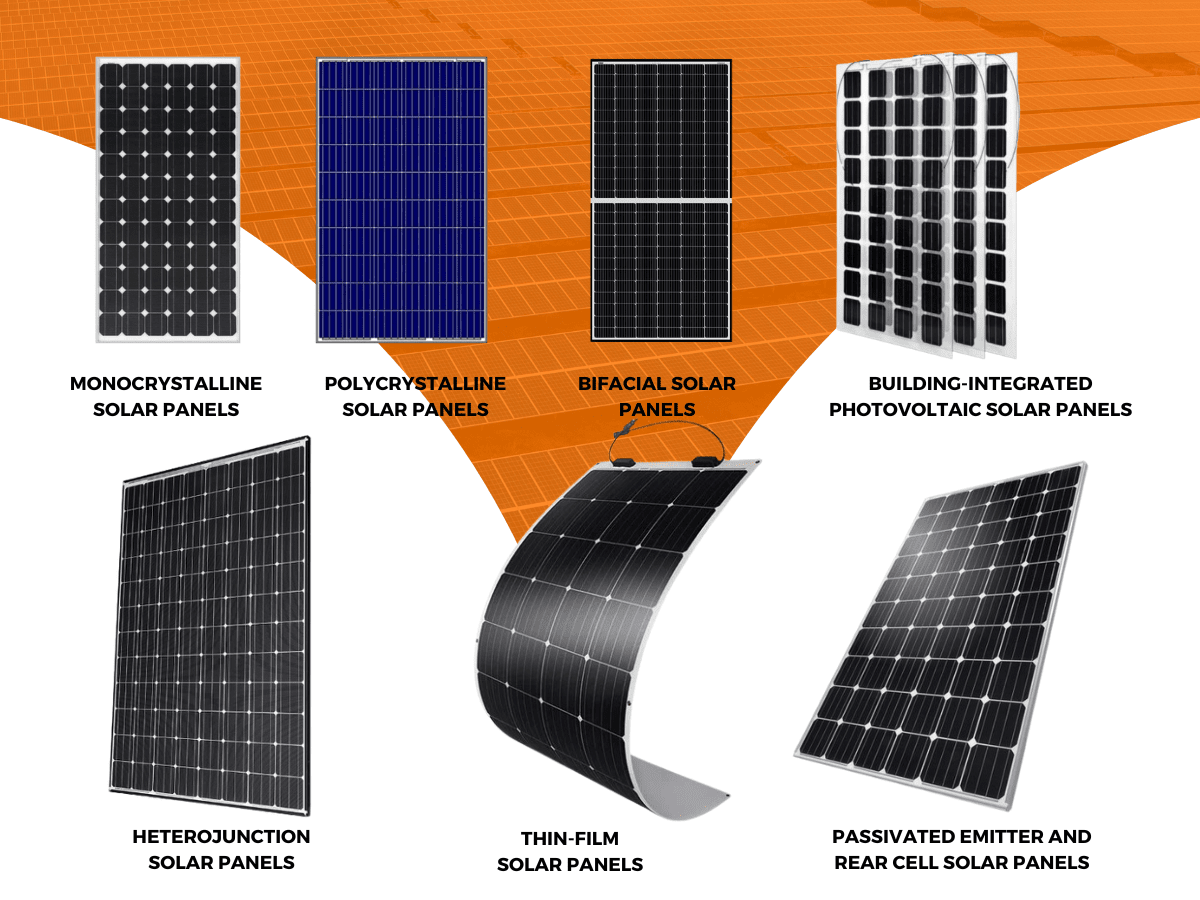
4.Bifacial Solar Panels:
a.Design: Bifacial panels can capture sunlight from both the front and rear sides. They utilize reflected light from the ground or surrounding surfaces, increasing overall energy capture.
b.Applications: Bifacial panels are often used in situations where light is reflected off surfaces, such as snow, sand, or white rooftops.
5.Building Integrated Photovoltaic (BIPV) solar panels
These are designed to blend seamlessly with the architecture of buildings while generating electricity. Here's a breakdown of the materials used, their efficiency, and appearance.
i.Efficiency:
1.Solar Cells: BIPV panels utilize photovoltaic cells, typically made from crystalline silicon, thin-film semiconductor materials (such as amorphous silicon, cadmium telluride, or copper indium gallium selenide), or emerging technologies like perovskite.
2.Substrates: The solar cells are often mounted onto various substrates, including glass, metal, or flexible materials like polymer films. These substrates provide structural support and protection for the solar cells.
3.Encapsulation Materials: BIPV panels are typically encapsulated with materials such as ethylene-vinyl acetate (EVA) or other transparent polymers to protect the solar cells from environmental factors like moisture, dust, and mechanical damage.Integration Components: BIPV panels may incorporate additional components such as wiring, junction boxes, and mounting systems to facilitate integration with building materials and electrical systems.
ii.Material
BIPV panel efficiency varies depending on the type of solar cells used, design considerations, and installation factors.
Monocrystalline and polycrystalline silicon-based BIPV panels tend to have higher efficiencies compared to thin-film technologies. However, advancements in thin-film technologies, such as tandem cells and improved manufacturing processes, are improving their efficiency.
iii.Appearance:
1.The appearance of BIPV panels can range from sleek and modern to traditional and understated, depending on the design preferences of architects, builders, and homeowners.
6.Heterojunction (HJT) solar panels
These are a type of photovoltaic technology that combines amorphous silicon and crystalline silicon layers to improve efficiency. Here's a breakdown of the materials used, their efficiency, and appearance in HJT solar panels:
a.Materials:
i.Crystalline Silicon (c-Si): HJT solar panels utilize crystalline silicon as the main material for the photovoltaic cells. Crystalline silicon provides high efficiency and long-term stability in solar cell performance.
ii.Amorphous Silicon (a-Si): In HJT panels, thin layers of amorphous silicon are deposited on the crystalline silicon wafer. These layers act as passivation layers, reducing recombination of charge carriers and enhancing the efficiency of the solar cell.
iii.Transparent Conductive Oxide (TCO) Layers: HJT solar cells often incorporate transparent conductive oxide layers, such as indium tin oxide (ITO) or fluorine-doped tin oxide (FTO), to facilitate the collection of generated electricity while allowing light to pass through.
iv.Encapsulation Materials: Like other types of solar panels, HJT panels are encapsulated with materials such as ethylene-vinyl acetate (EVA) or other transparent polymers to protect the solar cells from environmental factors and provide mechanical support.
b.Efficiency:
i.Heterojunction solar panels are known for their high efficiency, which results from the combination of crystalline silicon and amorphous silicon layers.
ii.The amorphous silicon layers act as passivation layers, reducing recombination losses at the interfaces and improving the overall efficiency of the solar cell.
c.Appearance:
i.HJT solar panels have a similar appearance to traditional crystalline silicon solar panels, with a dark blue or black color due to the presence of crystalline silicon cells.
ii.The surface of HJT panels may appear slightly smoother compared to traditional panels, reflecting the higher manufacturing precision required for depositing thin amorphous silicon layers.
7.Passivated Emitter and Rear Cell (PERC) solar panels
These are a type of crystalline silicon solar cell technology that incorporates advanced design features to improve efficiency. Here's an overview of the materials used, efficiency, and appearance of PERC solar panels:
a.Materials:
PERC solar panels use high-purity crystalline silicon wafers as the base material, with passivation layers added for improved efficiency. The passivated rear emitter structure facilitates efficient charge carrier collection and reduces contact resistance. Metal contacts on both front and rear surfaces extract generated electricity, optimized for minimizing shading losses and enhancing electrical conductivity. These features enhance overall cell performance.
b.Efficiency:
PERC solar panels, featuring passivation layers and a rear emitter structure, offer higher efficiency compared to traditional crystalline silicon solar cells, typically achieving 20–24% or higher.
c.Appearance:
- PERC solar panels, similar to conventional crystalline silicon panels, feature square or rectangular cells in a grid pattern on a backing material, with internal efficiency improvements.
Solar Installation Process
The solar installation process involves several steps, from initial planning to the commissioning of the solar power system. Here is an overview of the typical steps involved in the installation of a solar energy system:
- Site Assessment and Feasibility Study:
- Conduct a thorough assessment of the site where the solar panels will be installed.
- Evaluate factors such as available sunlight, shading, roof orientation, and structural integrity.
- Perform a feasibility study to determine the potential energy production, financial viability, and system size.
- System Design:
- Based on the site assessment, design the solar power system, considering the optimal placement of solar panels, inverter location, and electrical components.
- Determine the number and type of solar panels, inverters, and other components needed for the installation.
- Permitting and Approvals:
- Obtain the necessary permits and approvals from local authorities and utility companies.
- Ensure compliance with building codes, zoning regulations, and any other relevant requirements.
- Procurement of Equipment:
- Order the solar panels, inverters, mounting structures, wiring, and other necessary components based on the system design.
- Coordinate delivery schedules to ensure all components are available when needed.
- Installation of solar panels:
- Install the mounting structures on the roof or ground, ensuring they are securely attached.
- Attach the solar panels to the mounting structures, making electrical connections between the panels.
- Install wiring and conduit to connect the solar panels to the inverter.
- Inverter Installation:
- Install the solar inverter, which converts the DC (direct current) electricity generated by the solar panels into AC (alternating current) electricity for use in the building or to feed into the grid.
- Electrical Wiring and Connection:
- Connect the solar power system to the building's electrical panel.
- Install any necessary electrical upgrades or additional equipment to integrate the solar system with the existing electrical infrastructure.
- Metering and grid connection:
- If the system is grid-tied, install a bi-directional meter to measure both electricity consumption and excess electricity fed back into the grid.
- Coordinate with the utility company to ensure proper grid connection and metering.
- Testing and commissioning:
- Perform thorough testing of the entire solar power system to ensure proper functionality and safety.
- Commission the system, which involves final adjustments and configurations to optimize performance.
- Monitoring and Maintenance:
- Set up a monitoring system to track the performance of the solar power system.
- Establish a maintenance schedule to ensure the ongoing efficiency and longevity of the system.
- Documentation and Final Inspection:
- Complete all necessary documentation, including warranty information and system specifications.
- Schedule a final inspection with the relevant authorities to ensure compliance with regulations and safety standards.

Mariya Paul
Content admin